
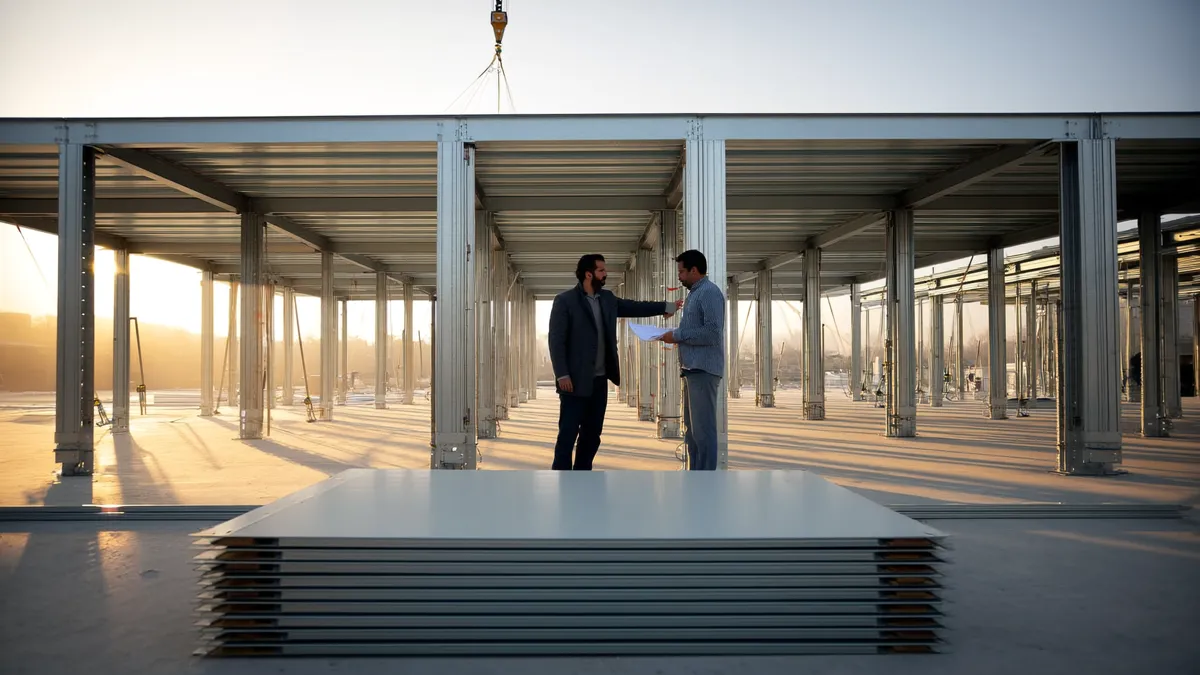
Why Are Small Businesses Choosing Metal Structures?
Unlike conventional brick-and-mortar construction, metal structures arrive on site virtually ready to assemble. This slashes total build time and cuts costs tied to prolonged space rental and extended labor. For small business owners working in time-sensitive markets — where a delayed opening means lost revenue — that speed advantage is critical.
Flexibility for future growth is another key driver. Entrepreneurs who start in modest warehouses can plan modular expansions without complex structural overhauls, reducing the capital required at each new growth stage. This scalability has attracted operators in logistics, wholesale trade, and light manufacturing.
What Does the Logistics of a Small-Scale Metal Build Look Like?
Even on smaller projects, transporting and positioning prefabricated metal beams, columns, and modules demands specialized equipment. These pieces cannot be unloaded or set in place by improvised means without risking delays or material damage — especially on tight urban plots.
Crane services and specialized freight become integral to the process from the earliest planning stages. Bringing those services in early helps entrepreneurs avoid last-minute schedule changes and on-site surprises. Companies like Altevir Seidel, which combine metal structure supply with crane and transport services, offer this integrated approach for small and mid-sized projects.
How Does the Cost Stack Up for Entrepreneurs?
Budget control is decisive when choosing a construction method. Metal structures typically generate less rework and produce lower material waste than conventional methods, translating directly into more predictable final costs. Standardized components also make phased financial planning easier — a significant benefit for businesses that are just starting out or expanding gradually.
The combination of shorter timelines, modular expansion potential, and tighter budget control explains why metal structures are becoming the go-to solution for small and medium enterprises in Brazil's construction sector.
- Metal structures arrive on-site pre-fabricated, reducing total construction time.
- Shorter build time lowers costs for space rental and extended labor.
- Modular design allows future expansions without major structural reform.
- Crane and specialized transport are essential even for smaller projects.
- Less rework and lower material waste improve budget predictability.
- Sectors driving demand: logistics, wholesale trade, light industry.
💬 Comments
Sign in to comment and like