
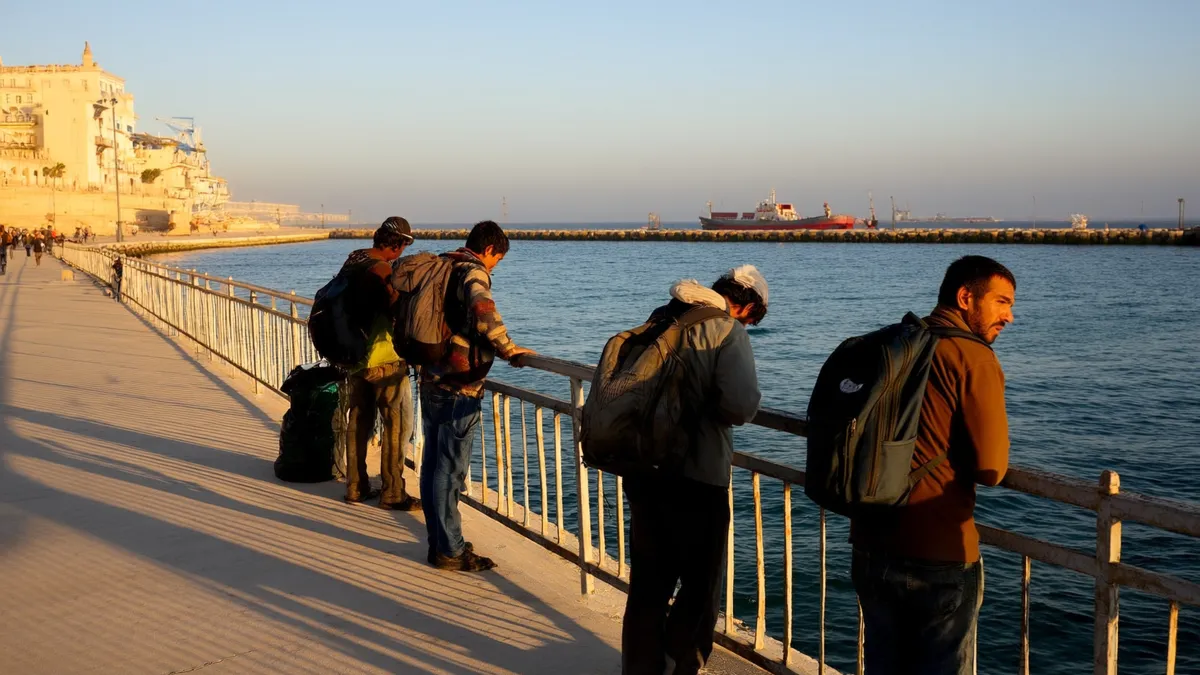
What happened at Ceuta's border with Morocco?
In one of Europe's biggest migration crises of the year, around 60,000 people crossed into Ceuta in a single day — most of them swimming across the sea from Morocco, an unprecedented method since crossings there typically happen overland.
What is Spain doing to stop new arrivals?
On Saturday, August 1, 2026, Spain's Civil Guard deployed a floating inflatable barrier roughly 500 metres long off the Ceuta coast. The pneumatic barrier, combined with a line of anchored naval buoys, is designed to sit 30–70 cm above the waterline and extend up to one metre below the surface. A channel between the two barrier lines allows Civil Guard vessels to patrol the area. The measure is described as temporary.
How many migrants have already returned to Morocco?
Spanish authorities say more than 48,000 of the roughly 50,000 people who entered Ceuta since Thursday, July 30, have already returned to Morocco — some voluntarily, others escorted to the border by soldiers and police. Interior Minister Fernando Grande-Marlaska stated: "Almost all of them have already left Ceuta. The situation has reversed almost completely."
What is the human cost?
Officials confirmed that the death toll from the mass crossing has risen to at least 67. Reuters reporters witnessed Spanish soldiers patrolling Tarajal beach — where thousands had swum ashore — and finding migrants hiding in tunnels. Many who crossed said they were driven by economic hardship and encouraged by rumours circulating on social media.
- ~60,000 people crossed into Ceuta in a single day — mostly by sea
- Floating barrier: ~500 m long, deployed on 1 August 2026
- Barrier sits 30–70 cm above water, extends up to 1 m below surface
- More than 48,000 migrants have returned to Morocco
- Death toll: at least 67
- Interior Minister Grande-Marlaska says situation is "almost back to normal"
💬 Comments
Sign in to comment and like