
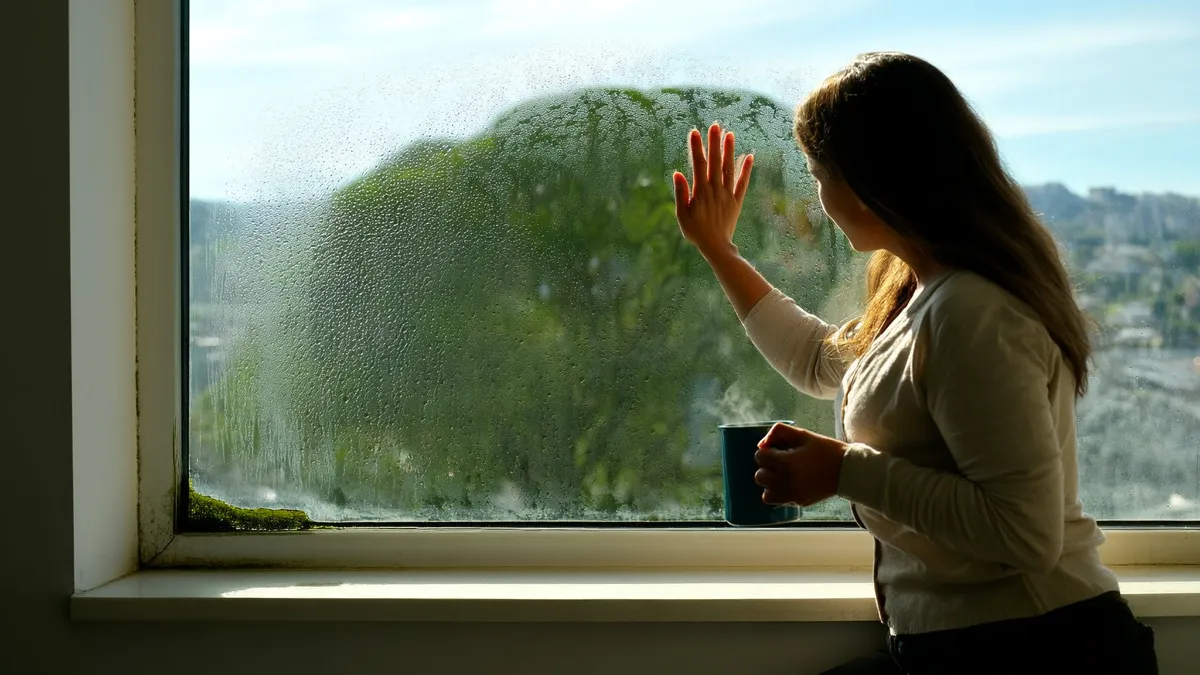
Why Is Indoor Humidity So Dangerous in Winter?
During the winter months in southern Brazil — especially in Rio Grande do Sul — cold walls, thermal bridges and poorly ventilated rooms create the perfect conditions for surface condensation. This invisible process allows mold and fungi to grow for years before anyone notices visible damage.
What Is Surface Condensation and Why Is It Mistaken for Leaks?
Condensation happens when water vapor in the air meets a colder surface and turns into droplets — the same effect you see on a cold glass on a hot day. Inside buildings, this process is often confused with water infiltration, leading homeowners to apply surface-level fixes that hide the moisture without eliminating its source.
How Serious Is the Health Impact?
Rio Grande do Sul has declared a public health emergency due to rising hospitalizations from Severe Acute Respiratory Syndrome (SRAG). The state has opened more than 1,400 new hospital beds dedicated to respiratory patients this year alone. El Niño, according to Brazil's National Meteorology Institute (INMET), is increasing the probability of above-average rainfall and prolonged periods of high humidity in 2026, making indoor air quality an even greater concern.
Is the Popular EPS (Styrofoam) Wall Fix Actually Safe?
Videos on social media have popularized applying EPS (styrofoam) panels to interior walls as a quick fix for damp patches. Architect Caroline Ghessi, director of communications at Drystore and specialist in building performance, warns this approach only masks the problem: moisture keeps acting inside the wall, potentially causing greater structural damage and serious health risks. EPS is a valuable construction material when applied correctly — on the exterior through the EIFS system — but interior application without proper technical guidance can make things worse.
What Actually Works?
Experts recommend addressing the root cause by controlling both temperature and humidity. Improving wall insulation from the outside, increasing ventilation and using certified damp-proofing systems are the most effective long-term solutions. As Ghessi notes, stable indoor environments directly reduce mold growth and positively impact respiratory health.
- El Niño (2026) is raising the risk of above-average rainfall in southern Brazil, per INMET.
- Rio Grande do Sul declared a public health emergency over rising SRAG hospitalizations.
- The state opened more than 1,400 new hospital beds for respiratory patients this year.
- An estimated 80% of buildings show some form of humidity-related pathology.
- Interior EPS panels mask moisture problems rather than fixing them, specialists warn.
💬 Comments
Sign in to comment and like