
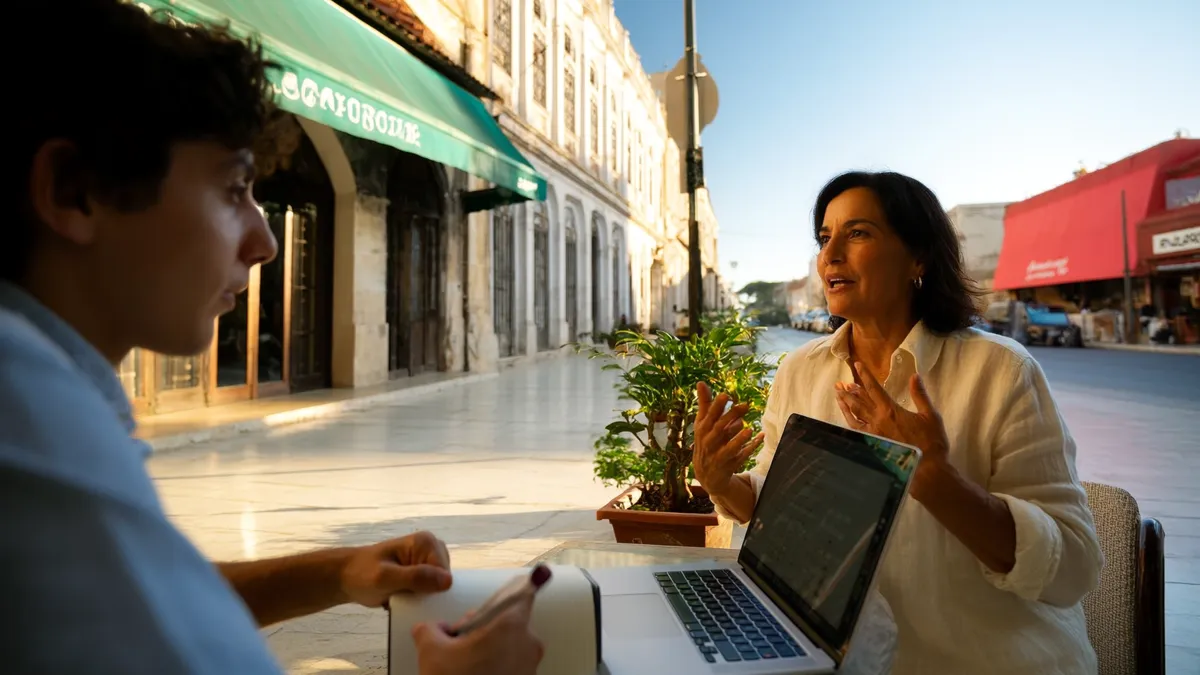
Why do so many Brazilians struggle with money despite earning well?
Brazil's financial literacy score sits at just 59.6 out of 100, according to Central Bank data compiled using OECD methodology. That gap between income and financial knowledge is exactly what lawyer-turned-educator Raquel Mendes set out to close.
Who is Raquel Mendes and what drove her to change careers?
Raquel spent nearly ten years as a procedural analyst at the Court of Justice and the Public Prosecutor's Office of the Federal District. Despite holding a stable public-sector post and moonlighting as a lecturer at universities and prep courses, she found herself overwhelmed by debt. The experience pushed her to study investments, behavioral economics and financial planning — and she realized her situation was far from unique.
What is the Lei dos Quatro Dinheiros method?
After leaving public service, Raquel built a financial education business around her own framework: the Lei dos Quatro Dinheiros (Law of the Four Monies). The method organizes personal finances around four dimensions: resources to maintain your current lifestyle, funds for personal goals, wealth-building through investments, and generating a positive social impact. The premise is that lasting financial prosperity requires balance across all four areas, not just saving or investing in isolation.
How big is the financial education gap in Brazil?
The numbers paint a clear picture. ANBIMA research shows that only 21% of Brazilians have ever taken a personal finance course or training program. Roughly one third of the population has no emergency savings at all. Meanwhile digital platforms and new investment products have multiplied, widening the gap between product availability and user knowledge.
Why does behavior matter as much as budgeting?
Raquel's method draws on behavioral economics and neuroscience alongside traditional financial planning. Her core argument: most financial education focuses on technical tools while ignoring the psychological and behavioral patterns that drive spending and saving decisions. Changing those patterns, she says, is the real lever for lasting change.
- Brazil's average financial literacy index: 59.6/100 (Central Bank / OECD methodology)
- Only 21% of Brazilians have taken any personal finance course (ANBIMA)
- About one third of Brazilians have no emergency fund
- Raquel Mendes worked ~10 years in the public legal sector before transitioning to financial education
- Her method — Lei dos Quatro Dinheiros — covers lifestyle, goals, investment and social impact
💬 Comments
Sign in to comment and like